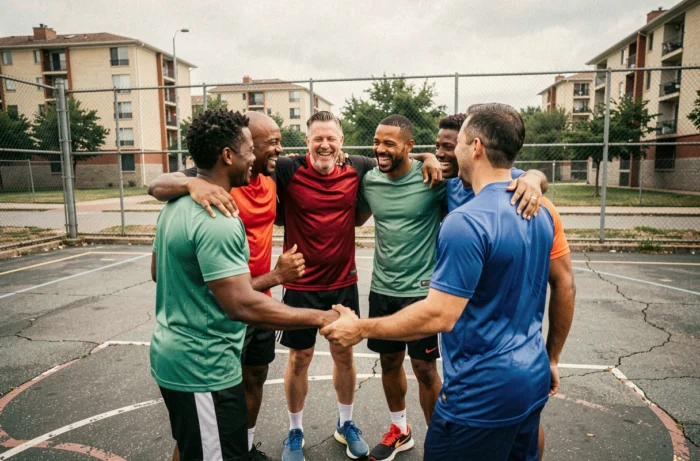
A football match among colleagues, a boxing class in a community center, a hike organized by a local association: these situations share a common point. They bring together people who, without sports practice, would probably never have crossed paths. Sports as a driver of solidarity and social inclusion is not just a slogan. It is a concrete mechanism, based on systems, funding, and field choices.
Socio-sport, a discipline in its own right
Have you heard of “socio-sport”? This term refers to an approach that uses physical activity as a tool for social intervention. It is not simply about offering a sports slot: socio-sport structures a comprehensive support around the practice.
The 2026 project call “Socio-sport, a lever for inclusion for young people,” launched by the Ministry of Sports, Youth, and Associative Life in September 2026, illustrates this professionalization. Each project must be co-constructed with an expert socio-sport structure. This requirement changes the game: we move from isolated initiatives to coordinated programs, with a precise methodological framework.
In practical terms, a football club that wants to welcome young people in difficulty can no longer just open its doors. It must work with a specialized partner (integration association, street educator, social-medical structure) to define measurable objectives. Resources document this dynamic at https://www.sports-solidarite.org/, which lists the actors engaged in this approach to solidarity sports.
Pass’Sport 2026: a refocusing towards low-income families
The Pass’Sport scheme has existed for several years, but its 2026 version marks a turning point. The decree of August 28, 2026, has significantly reconfigured the aid.
Three changes deserve to be detailed:
- The amount of aid is set at 50 euros, which corresponds to a significant portion of the cost of an annual sports license for a child
- The scheme is reopened to 6-13 year-olds, an age group that had been excluded in previous versions
- The eligibility criterion is no longer based on the back-to-school allowance (ARS) but on a CAF or MSA family quotient, which more precisely targets low-income households
This last point is the most structuring. By switching to the family quotient, the ministry refines the targeting. A single-parent family with two children and low income can more easily access the scheme than under the old system based on the ARS.
For a club or a sports association, this means a potential influx of new members from backgrounds that previously had no access to supervised practice. Social inclusion through sports first requires removing the financial barrier.
Support for local sports associations
Providing financial aid to families is not enough if the host structures are not ready. This is the second, less publicized but equally crucial aspect.
The 2026-2027 territorial sports policies foresee a strengthening of the Guid’Asso tool. This local engineering scheme helps small associations to structure themselves: administrative management, volunteer training, adapting slots to vulnerable audiences.
Why is this support so crucial? Because the majority of sports clubs in France operate with volunteers who do not have training in social work. Welcoming a young person with a disability, a teenager under judicial protection, or an adult in an integration pathway requires specific skills.
What co-construction changes on the ground
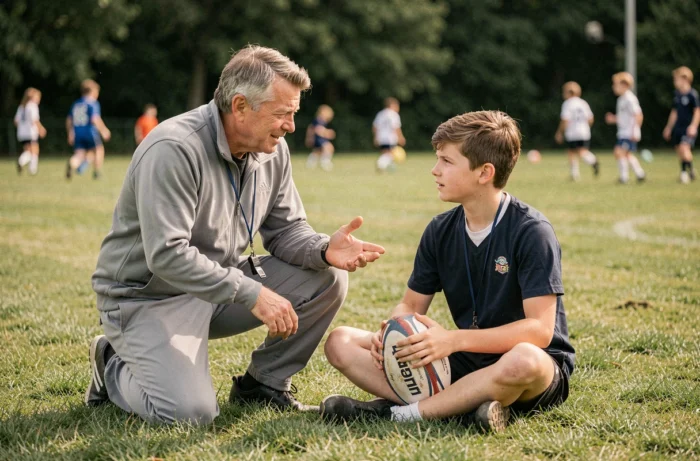
A judo club that works with a specialized educator adapts its sessions differently. The dojo rules remain the same, but the welcome framework evolves: flexible hours, adjusted fees, presence of a referent during classes. Physical activity becomes an educational support and not an end in itself.
This logic of co-construction, imposed by the 2026 socio-sport project call, pushes clubs to rethink their role. They are no longer just places for sports practice. They become spaces for inclusion, with support tailored to audiences distant from sports.
Sports and disability: beyond statements of intent
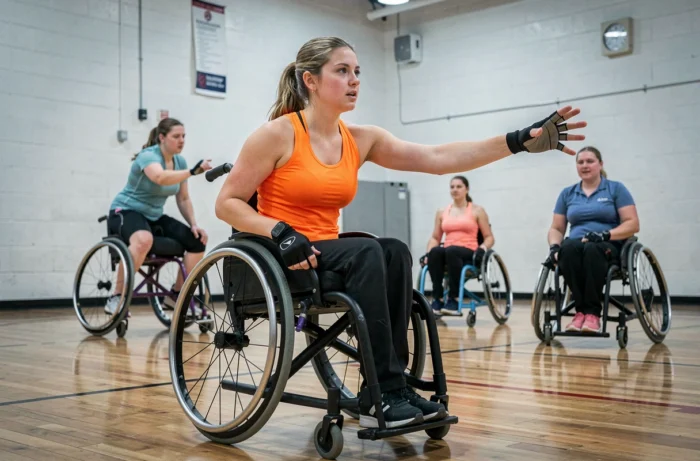
Inclusion through sports also concerns people with disabilities, and this is an area where progress remains uneven. Major federations display accessibility policies, but the ground tells a different story.
Accessibility is not limited to a ramp to the gym. It includes training for supervisors, availability of adapted equipment, and the club’s ability to welcome practitioners with very different needs in the same slot.
Recent actions by the ministry direct funding towards projects that associate sports structures with social-medical structures. The idea is simple: a club alone cannot do everything. However, a club associated with a rehabilitation center, a patient association, or a care home has a network of complementary skills.
Sports values and sustainable social ties
Respect for rules, mutual aid among teammates, managing defeat: these learnings may seem trivial for a regular practitioner. For an isolated person or someone in social rupture, they represent a rare structuring framework.
The values transmitted by sports practice in a club (punctuality, collective commitment, self-overcoming) transfer to other spheres of life. Sports acts as a space for socialization where the codes are clear and shared.
The challenge for the coming years is no longer about recognizing sports as a lever for inclusion. This principle is widely accepted. The difficulty lies in scaling up: transforming successful local initiatives into structured public policies, with sustainable human and financial resources. The Pass’Sport 2026 decree, the socio-sport project call, and the strengthening of Guid’Asso outline a framework. It remains to verify that this framework reaches the territories that need it most.