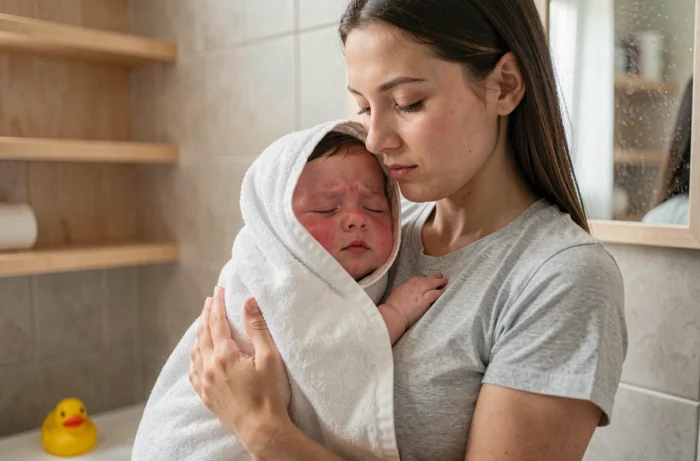
The infant bath rarely lasts more than a few minutes, but it engages the body far beyond what its short duration might suggest. Between regulating its temperature, processing new sensory information, and the muscular effort related to its position in the water, the baby’s body works on several fronts simultaneously. This expenditure explains why so many parents observe rapid falling asleep, sometimes even before finishing the bottle or breastfeeding.
Energy expenditure related to the thermoregulation of the infant
An infant has a skin surface-to-weight ratio significantly higher than that of an adult. In practice, this means that its skin dissipates heat much faster, especially when wet. As soon as it comes out of the water, evaporation accelerates cooling.
To maintain its internal temperature, the baby’s body draws on its reserves. This thermal compensation mechanism consumes calories and engages the metabolism in a measurable way, even if the bath lasted only five minutes.
The fatigue of the baby after the bath can largely be explained by this invisible effort: its body has worked to stay warm, and the drowsiness that follows is a logical response to this expenditure.
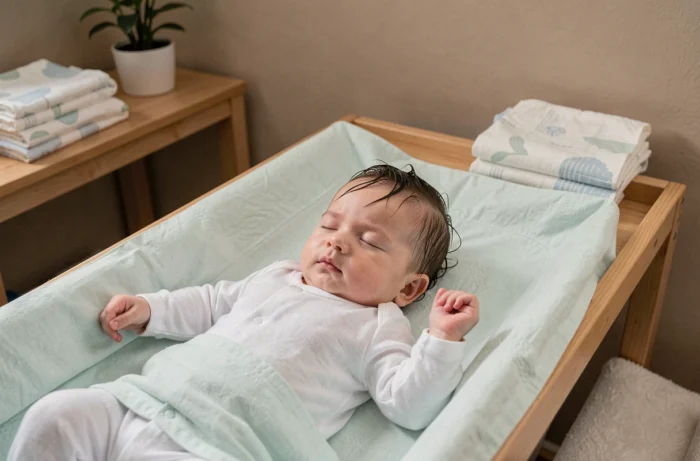
Neonatal recommendations emphasize that the prevention of cooling begins before and during the bath, not just after getting out. Preparing the towel, clothes, and the room at the appropriate temperature before undressing the baby reduces the duration of exposure to the cold and, consequently, the energy that its body will need to mobilize.
Sensory overload in water: a real neurological effort
Contact with water represents a dense sensory experience for an infant. Temperature, hydrostatic pressure, sound of the water, light from the bathroom, smell of the washing product: the baby’s nervous system processes dozens of stimuli simultaneously.
In adults, this information is automatically filtered and prioritized. The still immature brain of the infant does not have these filters. Each sensation receives almost equivalent treatment, which mobilizes more neurological resources.
This phenomenon of sensory overload does not always manifest as crying. Some babies remain calm in the bath, but their nervous system is functioning at full capacity. Fatigue appears afterward, once the stimulus is removed, as a backlash. This is why a baby who seemed perfectly awake and relaxed in the water can suddenly become drowsy in just a few minutes.
Prematurity and low birth weight: special vigilance
Babies born prematurely or with low birth weight have fewer energy reserves. Their thermoregulation capacity is even more limited. Marked drowsiness after the bath deserves heightened attention in these cases, rather than being considered a simple, trivial reaction.
For these infants, shortening the bath duration and ensuring that the room is sufficiently heated are precautions that reduce the burden on the body.
Decrease in body temperature and sleep signal
The physiology of sleep in humans partly relies on a decrease in core temperature. This mechanism also exists in infants. After a warm bath, the baby’s body temperature begins to drop naturally, and this decrease sends a favorable signal for falling asleep.
This is not an annoying side effect: it is a physiological sequence that many parents intuitively exploit by scheduling the bath at the end of the day, before bedtime. The post-bath drop in temperature acts as a natural trigger for sleep.
However, the missing data in accessible literature is the precise measurement of this thermal decrease in infants according to the duration and temperature of the bath. Practical recommendations are therefore calibrated based on parental observation rather than on quantified thresholds.
Signs of normal fatigue in the baby after the bath versus alerts
Not all signs of post-bath fatigue are equal. Recognizing what constitutes a normal reaction helps avoid unnecessary worry while remaining attentive to signals that warrant medical advice.
Expected reactions after the bath
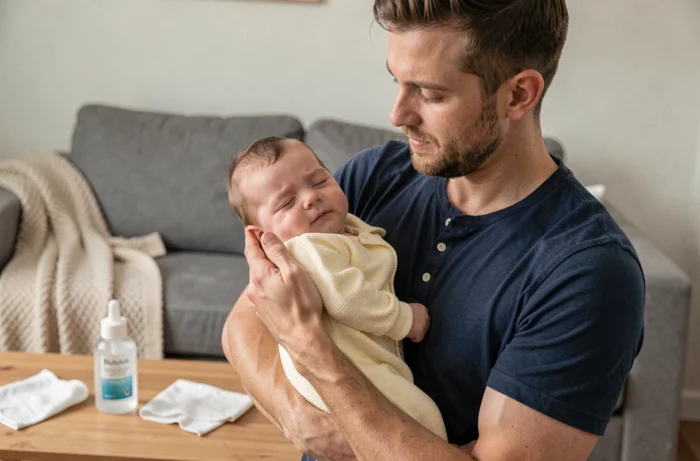
- Heavy eyelids, repeated yawning, or averted gaze: the infant signals that it needs rest after the effort of thermoregulation and sensory stimulation
- Slight irritability during dressing, which quickly subsides once the baby is warm and calm: this is often the last phase of energy expenditure
- Rapid falling asleep after breastfeeding or bottle-feeding, sometimes within minutes: the combination of regained warmth, satiety, and decreased core temperature promotes a smooth transition to sleep
Signals that warrant a consultation
- Unusual lethargy, with a baby difficult to awaken or who does not respond to vocal or tactile stimuli after the bath
- Mottled skin, persistent cold extremities, or bluish coloration despite quick drying and dressing
- Refusal to eat combined with prolonged drowsiness, especially in an infant under three months or born prematurely
The boundary between normal fatigue and alert signal often lies in the baby’s reactivity: a tired infant who responds to contact and feeds normally does not have the same profile as a lethargic and unresponsive baby.
The WHO recommends delaying the first bath of the newborn for at least 24 hours after birth, particularly to limit the risk of cooling. Skin-to-skin contact is also mentioned as a means of contributing to thermoregulation in the first hours of life. These precautions remind us that the thermal management of the infant begins well before the daily bath routine.
Adapting the bath duration to the baby’s reactivity, preparing the environment in advance, and observing its behavior in the minutes following getting out of the water remain the three most concrete levers to ensure that this moment remains a soothing ritual, without tipping into exhaustion.