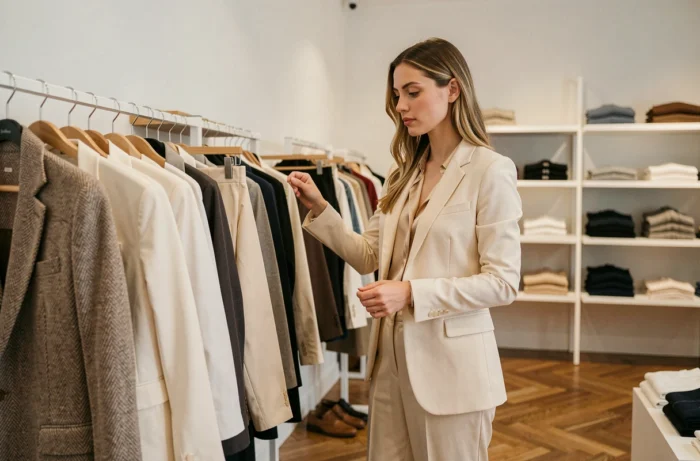
French women’s fashion is undergoing a profound transformation. The clothing market declined by 1.6% in value in 2025 according to the French Institute of Fashion, and the mid-range is facing simultaneous pressure from second-hand and ultra-fast fashion. Understanding these dynamics allows for more relevant clothing choices, whether building a sustainable wardrobe or following seasonal collections.
Anti-fast fashion law and new regulatory obligations in France
Law No. 2026-602 directly targets the practices of ultra-fast fashion. This French regulation, unique in Europe, imposes constraints on platforms that renew their catalogs at a pace deemed excessive. The brands involved must now display environmental awareness messages and pay financial penalties on very low-cost products.
For consumers, this regulation concretely changes the online offer available. The real cost of an ultra-fast fashion garment mechanically increases with these new taxes, reducing the price gap with French brands positioned in the entry or mid-range.
We observe that this law also pushes traditional retailers to communicate more about the traceability of their supply chains. Collections that incorporate certified or recycled materials gain visibility, not out of marketing opportunism, but because the legal framework makes transparency almost mandatory.
Second-hand and women’s fashion: a structural segment
Second-hand is no longer a niche. In the first quarter of 2025, it represented 10.9% of clothing purchases in value in France, rising to 16.3% among 18-34 year-olds, according to the consumer barometer from the French Institute of Fashion. This level of adoption transforms how new collections are designed and marketed.
Brands that offer their own resale channels have better control over their image and recover part of the residual value of their pieces. For those seeking well-crafted women’s collections, it becomes relevant to combine physical stores and specialized platforms to learn more about Marina Mode and the catalogs that integrate this sustainability logic.
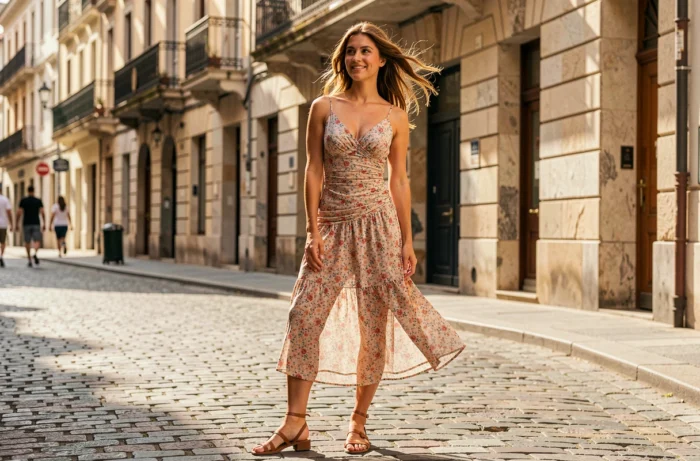
The direct consequence on trends: pieces with high resale value take precedence. A well-cut pair of raw denim jeans, a structured knit dress, or a mixed wool coat retain their value in the second-hand market. Garments designed to last now guide style choices, even among buyers attentive to new arrivals.
Women’s autumn-winter fashion trends: key pieces that structure a look
Autumn-winter collections concentrate the heaviest clothing investments. Rather than listing dozens of micro-trends, we recommend focusing on three categories of pieces that determine the coherence of a seasonal wardrobe.
- The high-waisted pleated trousers, which have made a strong comeback in recent seasons, replace slim jeans in structured looks. Opt for a fabric dense enough to hold its shape without lining.
- Oversized knitwear in wool or blended cashmere serves as a statement piece. A high collar or deep V-neck radically changes the silhouette and usage (office or weekend).
- The straight mid-length coat, cut below the knee, remains the most cost-effective piece per wear. Neutral colors (camel, heather gray, black) maximize combinations with the rest of the wardrobe.
Three well-chosen pieces cover the majority of daily to evening situations. Accumulating trendy garments with a short lifespan costs more over a full season than a wardrobe focused on quality basics.
Colors and materials to watch this season
Autumn palettes oscillate between earthy tones (rust, khaki, chocolate) and bolder shades like deep burgundy. Paris Fashion Week regularly highlights sustainable materials and intricate textures: corduroy, plant-based leather, boucle wool.
The choice of material directly impacts the appearance of a color. A burgundy in velvet does not produce the same effect as a burgundy in synthetic jersey. The material takes precedence over color in constructing a convincing autumn-winter look.

Online shopping and physical stores: where to buy women’s clothing
In November 2025, online clothing sales grew by 6.6% year-on-year while physical stores lost 3.7%, according to the IFM distributor panel. This shift does not mean that physical stores are disappearing, but that their role is changing.
The store becomes a fitting and morphological advice space. The final purchase increasingly occurs online, often after a visit to the store. Successful brands combine both channels: fitting rooms in-store, home delivery from the central stock.
The hybrid shopping journey dominates French women’s fashion. Brands that still compartmentalize web and store are losing customers to those that streamline the transition from one channel to another.
Morphology and style advice: what digital changes
Online morphology recommendation tools are multiplying. Providing your measurements allows for suggestions of suitable cuts, which reduces the return rate. A high-waisted jean suits A-shaped silhouettes, while a straight model flatters H-shaped bodies.
These guides do not replace trying on clothes, but they effectively filter a catalog of several hundred references. The combination of an online morphology filter and targeted fitting in-store represents today the most effective journey for building a coherent wardrobe throughout the year, from spring to winter.