
A salmon fillet placed on a rack, a little water in the roasting pan, the oven set to convection heat: you get a meltingly tender flesh without having invested in a dedicated steam cooker. Steam cooking in the oven is based on a simple principle, but a few technical details make the difference between a perfectly tender dish and a dry or soggy result.
Unintentional steam in the oven: when humidity works against you
Before discussing technique, a common trap deserves mention. When you overload a dish with vegetables or stack chicken pieces too closely, the food steams instead of roasting. The water they release gets trapped, creating an unwanted humid atmosphere, and the surface never browns.
For potatoes or cauliflower in the oven, the solution is known: use a wide dish, or even spread them over two levels, so that each piece has space. We are then seeking the exact opposite of intentional steam cooking.
Understanding this distinction changes how you organize your dishes. When you want steam, you confine. When you want roasting, you space out. Mastering steam cooking in the oven with 10 Grammes relies on this deliberate choice between a humid environment and a dry environment.
Creating a steam environment in a conventional oven
A dedicated steam oven injects water via an integrated reservoir. In a conventional oven, you replicate the same effect with simple means, and the results are quite usable for everyday cooking.
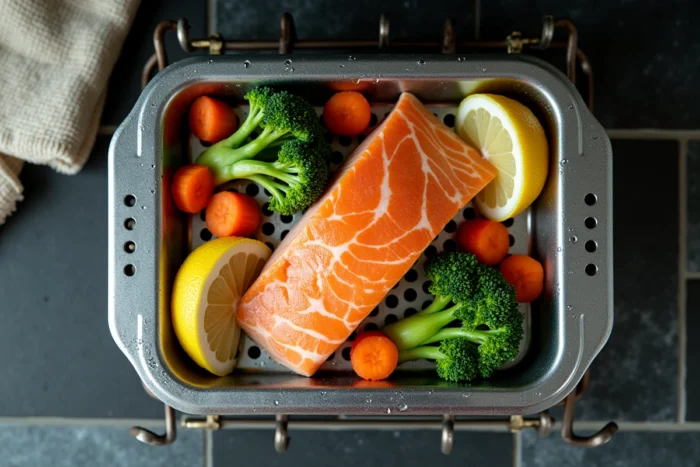
Three concrete methods depending on available equipment
- Water in the roasting pan: pouring a little hot water into the lower tray of the oven generates constant steam. This method works well for fillets of fish, root vegetables, and bread, where you want to prevent the formation of a crust too quickly on the surface.
- Covered dish with lid or aluminum foil: a closed cast-iron pot or a covered dish creates a sealed environment. The water contained in the food turns into steam and circulates. You get a result close to braising, particularly suitable for whole chicken or melting vegetables.
- Papillote: fish in papillote (salmon, cod, sea bass) with a few slices of lemon and a drizzle of olive oil cooks in its own steam. The individual papillote allows you to control the cooking piece by piece and adjust the flavors with herbs or a light sauce.
Feedback varies on the comparative effectiveness of these three approaches: the roasting pan gives a more diffuse steam, while the closed pot provides more concentrated steam. The choice depends on the desired result and the dish being prepared.
Temperatures and steam cooking times in the oven: the key benchmarks
Most guides remain vague on settings. In combined steam mode (if your oven offers it), the useful range is often between 80 and 95 °C for gentle cooking of vegetables and fish. This fine setting preserves texture without overcooking.
For a conventional oven without a dedicated steam mode, you work differently. The temperature is set higher (around the usual thermostat setting of the recipe), and it is the added water source that moderates the thermal environment.
The two-step protocol for meats
An effective approach for chicken or thick cuts is to start covered with steam, then finish uncovered. The first phase cooks the meat deeply without drying it out. The second phase, with the oven open and dry heat, browns the skin and adds crispness.
This two-step protocol avoids the classic dilemma between a golden but dry chicken, or a moist but pale one. You achieve both textures in the same cooking process, without adding extra fat.

Which foods benefit most from steam in the oven
Not all foods react the same way to humidity. Some gain in flavor and texture, while others lose their appeal.
Vegetables: the most favorable terrain
Cauliflower, green beans, spinach, and peppers retain their color, crunch, and nutritional qualities much better than when boiled. Steam in the oven also allows for a slight roasting at the end of cooking to add caramelization.
Fish: guaranteed melting texture
Salmon and white fish in papillote remain the most reliable recipes for steam cooking in the oven. The flesh retains its tenderness, and the flavors of the herbs (basil, lemon, dill) infuse the fillet without overwhelming it. No need for oil or fatty sauce to achieve a tasty dish.
Dough-based preparations
Artisan bread benefits from a burst of steam at the beginning of cooking: the crust forms more slowly, allowing the crumb to rise more. Amateur bakers using a home oven often place a container of boiling water on the oven floor to replicate this effect.
Oven maintenance after steam cooking: a often neglected point
Repeated humidity in a conventional oven (not designed for steam) can cause limescale deposits on the walls and the heating element. After each steam cooking session, wiping the still-warm walls with a cloth limits accumulation. A high-temperature empty run for about ten minutes dries up moisture residues.
For integrated steam ovens, descaling the reservoir follows the manufacturer’s recommendations. For a conventional oven used regularly with water, a monthly cleaning of the roasting pan and a visual check of the door seal are sufficient to keep the appliance in good condition.
Steam cooking in the oven requires neither expensive equipment nor special skills. A covered dish, a little water at the right time, and the correct temperature setting transform an ordinary oven into a tool for healthy cooking. The only real trap remains confusing intentional steam with unintentional steam; this distinction alone changes the quality of everyday meals.