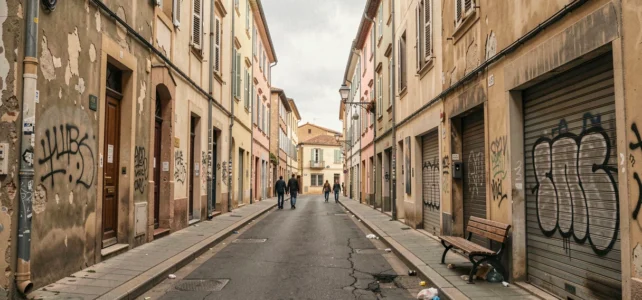
When looking for an apartment in Montpellier, the first reaction is often to ask colleagues or real estate agents which areas to avoid. The problem is that the answers vary depending on the time of day, the type of journey, and the profile of the tenant. A neighborhood deemed pleasant on a terrace at noon can become uncomfortable to walk through after midnight. To navigate this, one must think in terms of micro-sectors and time slots, not fixed labels.
Residential safety and transit safety in Montpellier: two distinct realities
These two concepts are often confused, which skews most lists of neighborhoods to avoid. Living in an area and passing through it late at night are two different experiences. A resident of Figuerolles returning home at 7 PM does not experience the same situation as a student walking up the street at 2 AM.
This distinction also matters for rental investment. A property located on a quiet street in a neighborhood known for being sensitive can offer a decent return and a perfectly normal daily life. Conversely, some very central streets, close to the Comédie or the Saint-Roch train station, experience opportunistic thefts in the evening despite their reassuring image during the day.
To assess an area before signing a lease, it is recommended to visit at three distinct times: in the morning, in the late afternoon, and after 10 PM on a Friday or Saturday. This is the most reliable method to form an opinion that goes beyond reputation. By consulting the map of hot neighborhoods in Montpellier, one can identify flagged areas and focus visits on sectors that truly raise questions.
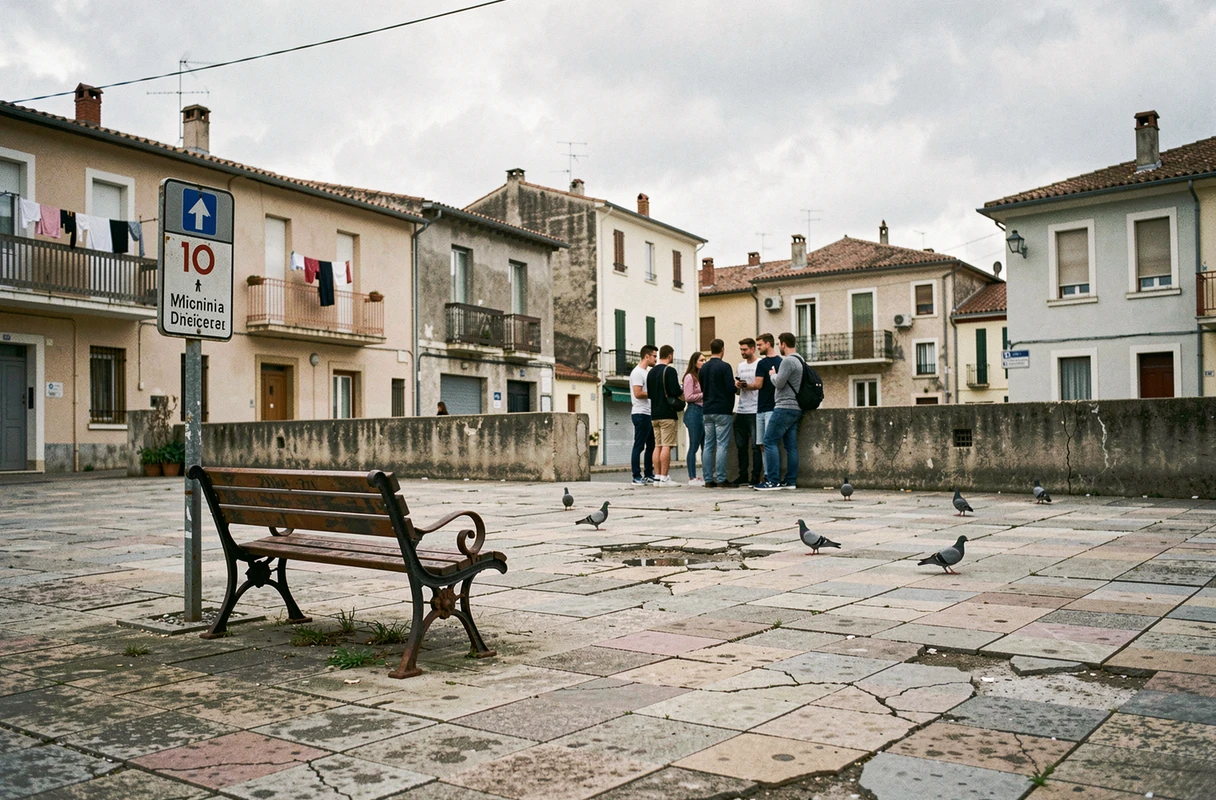
Montpellier: tensions by micro-sector rather than entire neighborhoods
Articles that list “La Mosson” or “Figuerolles” as homogeneous blocks to avoid miss the on-the-ground reality. Deterioration is often localized, concentrated on a few streets or entryways.
La Mosson and La Paillade: beyond the cliché
This sector remains the most cited when discussing sensitive neighborhoods in Montpellier. Street tensions, petty crimes, and heightened vigilance in the evening have been documented there for years. The 1960s apartment blocks shape the landscape and perpetuate a negative image.
On the ground, feedback varies by alley and residence. Some renovated condominiums offer a decent living environment, while others suffer from active drug dealing points nearby. For a purchase or rental, one must look at the street level, not the neighborhood.
Figuerolles and Gambetta: variable caution
These two sectors near the center combine real charm (food shops, neighborhood life, proximity to the Écusson) with well-identified nighttime nuisances. Opportunistic thefts and incivilities concentrate on the thoroughfares between bars and tram stations.
During the day, Figuerolles remains a lively neighborhood sought after by diverse profiles. It is in the evening, especially on weekends, that vigilance is necessary.
Saint-Roch Station and New Saint-Roch
The train station area functions as a high-traffic transit zone. Tensions there are related to passenger flows and late-night gatherings rather than classic neighborhood delinquency. Residents of New Saint-Roch describe an overall calm daily life, with peaks of discomfort limited to weekend nights.
Recent signals street by street: what residents say in 2026
Local press in Montpellier has recently reported specific testimonies that go beyond generic lists. Merchants on Henri-René Street have publicly stated they are throwing in the towel due to insecurity, with some believing that their health is not worth the price of their business. This type of localized signal shows that problems crystallize on specific points rather than entire areas.
In another context, residents of a Montpellier condominium sent a petition and a letter to the mayor to lament the growing insecurity in their building. These collective actions are a useful indicator when prospecting: they reveal tensions that the city’s overall statistics do not capture.
- Check petitions and letters from residents published in the local press before signing a lease in a targeted area
- Consult the minutes of neighborhood councils, which often mention security black spots reported by residents
- Cross-reference real estate listings with geolocated news items to identify streets that frequently come up
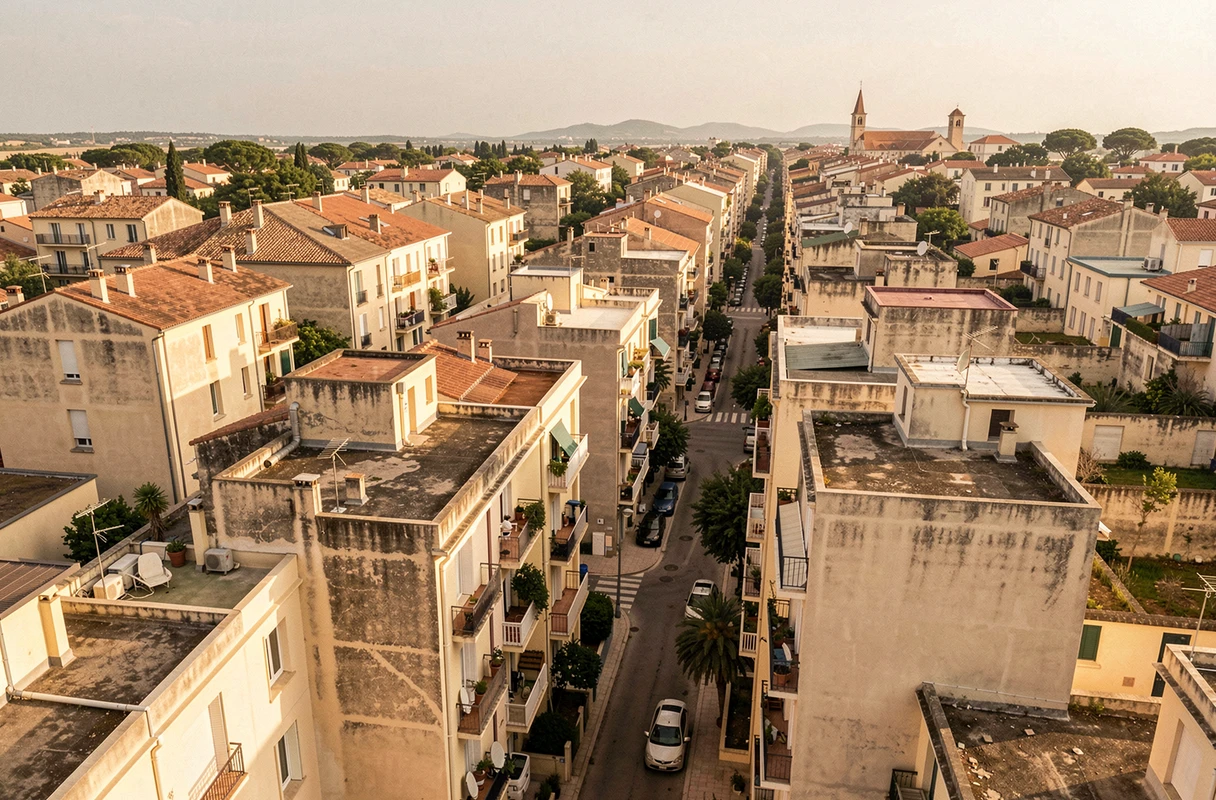
Concrete criteria for evaluating a sector before moving to Montpellier
Rather than relying on fixed rankings, it is beneficial to apply a field evaluation grid. Here are the points that truly matter during a visit.
- Observe the condition of the common areas of the building: forced mailboxes, broken lighting, recent tags in the lobby are reliable markers of local tensions
- Count the number of open shops on the street: a succession of closed shutters during the day signals an economically struggling area
- Listen to the noise level after 10 PM from the visited apartment, with windows open, to assess actual nighttime nuisances
- Identify the distance to the nearest tram stop and the walking route at night: most reported incidents occur on return journeys between transport and home
These checks take a total of one hour and can prevent months of regret. We do not ask a neighborhood to be perfect; we ask it to be compatible with one’s lifestyle and schedule.
Montpellier remains a city where most sectors offer a pleasant living environment. Problematic areas are measured in streets, sometimes in portions of streets, rarely in entire neighborhoods. Making the right diagnosis before committing is the only method that holds over time.